
Don’t Let Your Boss Do The Staff Portraits with His iPhone
You won’t believe how many times I have shown up at a company to do their staff headshots and heard the marketing manager tell me, “Oh, we’re so glad you came! The boss wanted to do these pictures on his smartphone...”
You won’t believe how many times I have shown up at a company to do their staff headshots and heard the marketing manager tell me, “Oh, we’re so glad you came! The boss wanted to do these pictures on his smartphone...”
Literally, dozens of times.
You’d think it would be a no-brainer for a company to hire a professional photographer to capture professional headshots of the office staff; but alas, the reason for this blog article!
Before I dive into it, I’d like to briefly refer to a couple of the principles I discussed in the last article as they directly apply to this week’s message:
When photographing headshots, you would be wise to capture your subjects with a lens that is at least 85-100mm long; you will avoid distortion and take advantage of lens compression (if you don’t remember what that is, you can refer to our previous article here), both of which will complement your subject and prevent them from becoming an unhappy Client.
We also discussed how the zoom feature on your phone will never actually give you a suitable focal length for portraits because it caps out at around 50mm (which is still considered a wide angle lens) before the digital zoom takes over.

24 mm

50 mm

85 mm

100 mm
The aim of this article is to expand on the idea that portraits, specifically corporate headshots, are better left to the professional with the appropriate knowledge and gear (notice how I didn’t just say gear) and introduce you to the concept of lighting!
Despite Night Sight and all of the other fancy gadgetry built into your iOS or Android device, your smartphone will never really help you with lighting.
Let’s dive a little deeper, shall we?
Regardless of the camera that you are using, you are doomed from the very beginning if you are attempting to capture portraits in an office setting, for example. The light sources in most conventional business settings shine directly from above---straight down from the ceiling.
But isn’t that the same direction the sun shines and is most natural? Yes, but no.
Aside from the beads of sweat running down people’s faces and squinty eyes that can’t be unsquinted, the obvious reason this is a no-go is the kinds of shadows it creates on your subject matter! With any overhead lighting, shadows appear under the subject’s eyes, nose, and lips, making them look like Lord Voldemort (I mean...He Who Must Not Be Named…)
So how do you mitigate against this Death-eater style of lighting?
The answer: the flash on your smartphone! Just kidding. Here’s why:
The flash on your smartphone is very small and the smaller the light source, the harsher the light it produces.
Secondly, since the flash is positioned right above or very near to the camera’s lens, you get the same quality of light as a camper looking for their shoes in the middle of the night with a headlamp.
Also, there is a good chance that your subject will have red eye in the picture, because the flash reflects directly off the retina (which is full of blood vessels causing the redness) and back into the lens.
The flash from your phone hits your subject straight on which tends to make them look very flat and dimensionless.
Lastly, you have little control over the light and where it goes or how it lands.
The real answer: soft, directional light sources; in other words, light that doesn’t come directly from above (or directly from your camera!).
Your main light, or key light, should be a directional light source so as to reveal more of the subject’s face, create interesting catchlights in the eyes (the small twinkle in the eye which is a reflection from the light source), and add dimension to the person’s face and features.
Now, don’t just go grab some office lamps and point it arbitrarily at your subject in an attempt to create some directional light.
In addition to having soft, directional light sources, there are many other variables a photographer needs to consider when lighting their subjects; for example, which direction should the light come from exactly? At what angle? What is the ratio between highlights and shadows? How dramatic is the image going to be? Do we want to show texture on the person’s face or take it out altogether? Which is the person’s good side (you think I’m joking, but we all have a good side!)?
There is a lot to consider when doing a headshot!
I have found that there are two important considerations that will ultimately dictate the rest of the decisions I make when creating a headshot:
What is the overarching message that we are trying to convey through this headshot?
Will the person be pleased when they see their headshot?
It is my job as a photographer to understand the purpose for the headshot and how it will be used as a communication tool for the Client. For example, a photo of a criminal lawyer can be technically sound, but if it appears too happy or comical, it may lead people to believe that this person doesn’t take litigation seriously. Likewise, if a daycare owners appears too serious, they may be scared to leave their children with them for the day. These are just examples.
It is also my responsibility to help someone look their best! We all have different features and personalities which can be enhanced or diminished with different lighting techniques—we need to make sure we are making the proper enhancements! It should never assumed—or neglected altogether—that there is a default method to make everyone look their best—everyone is unique, and each portrait should be treated as such.
Speak to a professional photographer about the message that you, or the company you are representing, are trying to convey to the world. If that person can provide ideas on how to articulate this in a photo, then you have found a great photographer; at that point, you can do yourself (or your boss) a favour and invest in images that make your company personnel look great and convey your message to your audience!

This is a photo of my cousin, who clearly doesn’t have a beer gut. I figured this would be better then publicizing some random guy’s photo without permission. Plus he also kind of looks like Lord Voldemort in this photo, which further illustrates my previous point.
“It will open your business up to countless new impressions that didn’t exist back when Jim in accounting had his beer gut showing at last year’s Canada Day Celebration.”
Also, here’s a tip for business owners: remember that these images can be powerful marketing tools when your employees’ use them as profile pictures on their social media accounts. Their good image reflects back on you. If all of your employees are unified in this way, it can strengthen your brand online. It will open your business up to countless new impressions that didn’t exist back when Jim in accounting had his beer gut showing at last year’s Canada Day Celebration.
Please don’t let your boss do the staff photos with his iPhone, or any smartphone. He’ll thank you later!
Brock.
The Truth About Portrait Mode
It bothers me (to no-end) that the main selling feature for mobile devices today is their camera systems. Smartphone companies are boasting new features like Portrait Mode which promote a sure-fire way to capture stunning portraits no matter what circumstance you find yourself in. A load of BS (Bologna Slices) if you ask me!
It bothers me to no-end that the main selling feature for mobile devices today is their camera systems. Smartphone companies are boasting new features like Portrait Mode which promote a sure-fire way to capture stunning portraits no matter what the circumstance is—it’s a load of Bologna Slices if you ask me!
I have found that most smartphones lack the fundamental components needed to capture a good portrait in the first place—with or without using Portrait Mode! In this article, I want to expose (no pun intended—how many times has that joke been used by a photographer!?) one of the aspects of the “camera phone” that enthusiasts should be aware of when attempting to create stunning portraits with their devices: the lens.
The lens on your average smartphone is not a portrait lens!
I probably shouldn’t say that it isn’t a portrait lens; let’s face it, no one is stopping you from taking selfies!
Perhaps we should define what a portrait is; for the sake of this article, I am going to describe it as an image of a person photographed from the waist up, where they take up the majority of the frame, and look fairly respectable—like a school photo or business headshot (although we all know that those can look quite ridiculous as well).
To say it more diplomatically, the lens on your smartphone is a wide-angle lens; the iPhone, for example, has what is equivalent to about a 26mm lens, which is actually 2mm shy of being considered an ultra wide-angle lens. It is a lens that is typically used for landscapes or architecture—not portraits!

Walterdale Bridge shot at 24mm, f/11, 1.6s, ISO 400,
The camera adds ten pounds and inflates my head?
The reason is simple: distortion. Objects that are close to the sides and corners of the frame appear stretched; although this is great for landscape and architectural photography where it is often the skies, shorelines, and manufactured landscapes that undergo the exaggerated effect (while still maintaining believability), the same cannot be said for a close-up portrait of a human being. Depending on where the subject is situated in the frame, this can lead to abnormally large hands, feet, and head which is quite unflattering to say the least!
“Her head is disproportionately bigger than her body!”
he told me emphatically.
My head shrunk a few sizes after that critique.
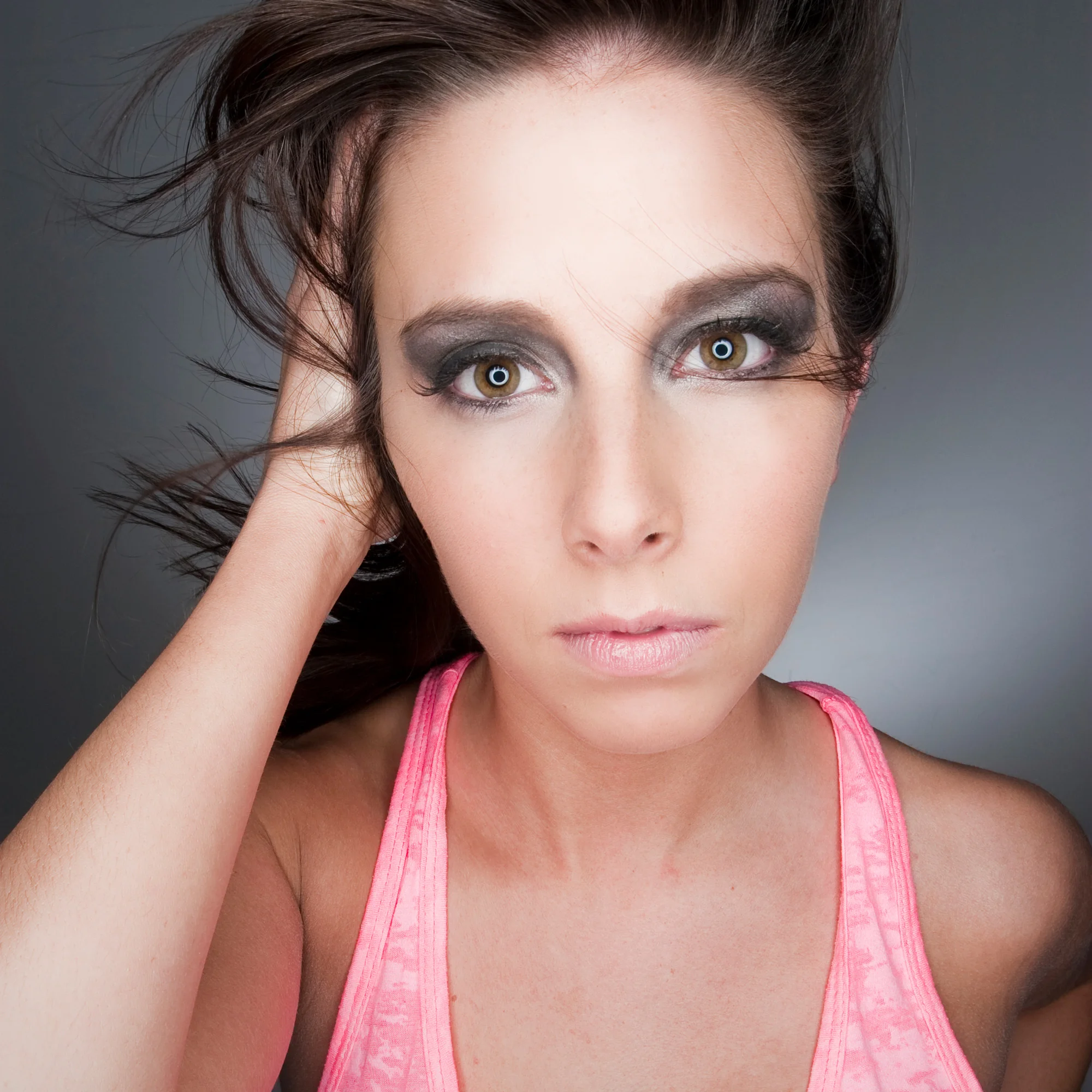
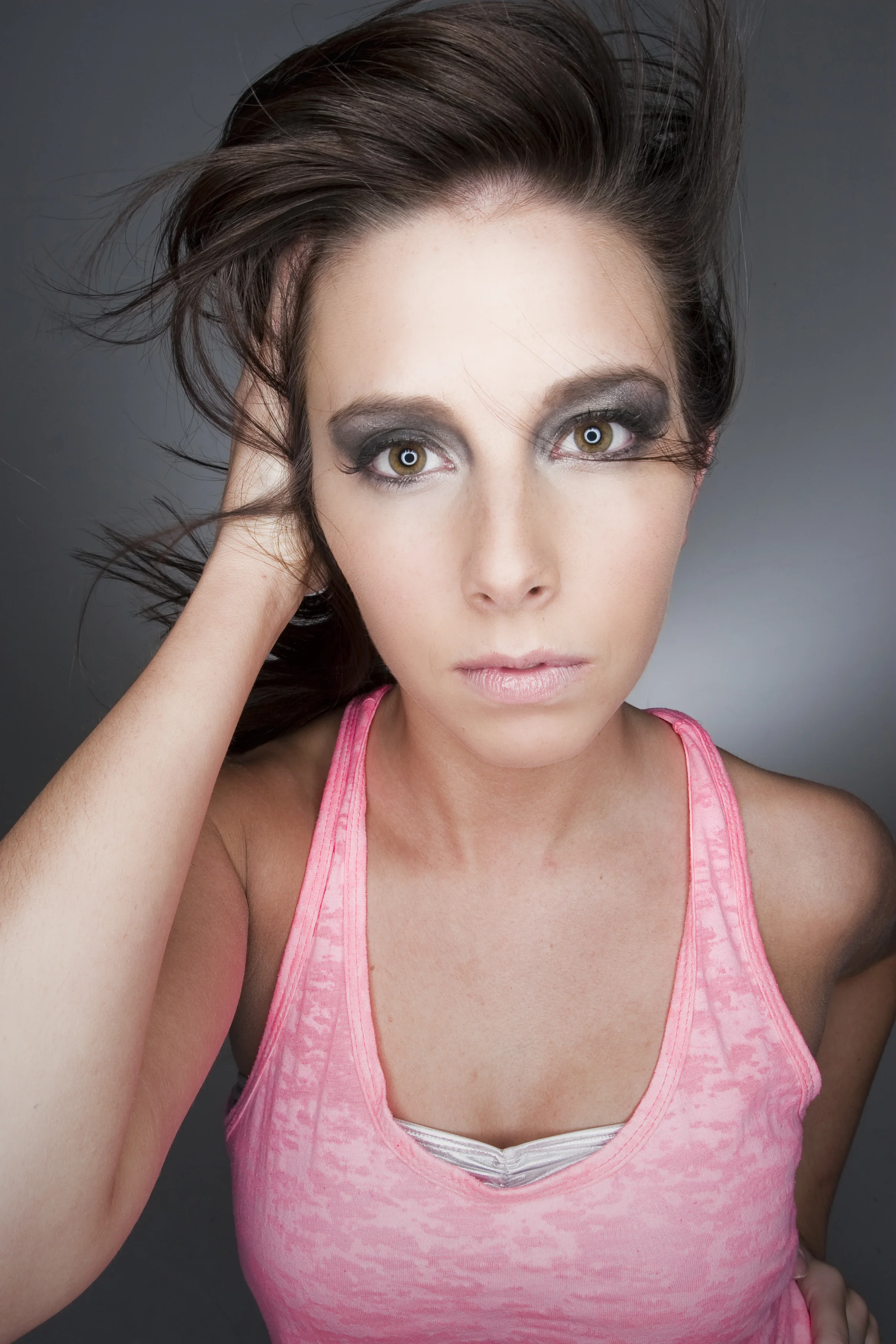
Another thing to consider is your Subject to Camera Distance. Take a look at the portrait of Danna above. It’s a great image, right? Wrong!
While studying photography at MacEwan University, my instructor was very critical of this image. “Her head is disproportionately larger than her body!” he told me emphatically.
My head shrunk a few sizes after that critique.
Objects that are closer to a camera fixed with wide angle lens appear larger than those objects that are further away. Not only will getting closer to your subject make them larger in the frame, but the part of their body that is closest to the lens will look disproportionately larger than the rest of the body—it’s unflattering (did I mention that already?)! Sorry Danna!
Combat lens distortion with portrait lenses!
Portrait lenses typically have focal lengths between 85-100mm; for the record, they aren’t actually called Portrait lenses, but the reason they are considered as such is because this kind of glass (fancy photographer word for “lens”) has minimal distortion and allows you to take advantage of another phenomenon known as lens compression. Notice that my assistant, Lance, becomes much more attractive as the focal length of the lens increases (my headshots are typically shot with a 100mm lens). This is the effect of lens compression.
24 mm
50 mm
85 mm
100 mm
But I thought we were talking about iPhone photography? The device with the 26mm lens?
We are; in fact, you can actually purchase third-party zoom lens attachments for your smartphones such as the Sony QX10 that have focal lengths of 28mm-100mm!
You may be thinking, “well, I can just zoom in with my smartphone camera!”
This is true; however, you will never actually achieve a suitable focal length for a standard portrait (similar to the ones that you see above) with the camera’s innate lens capabilities. In fact, the closest you can realistically go is about 2x (or 50mm which is still considered wide angle) before the digital zoom takes over (digital zoom is when the camera crops a portion of the image and then enlarges it back to size—this isn’t a “true zoom” or ”optical zoom” as it is otherwise known).
Another option is to capture environmental portraits.
Remember when I mentioned that I probably shouldn’t say that [a wide angle lens] isn’t a portrait lens? Keeping your subject relatively small in comparison to the rest of the image and placing them in (or very near to) the centre of the frame—the area with the least amount of distortion—will help you avoid the unflattering effects we discussed earlier. You will likely incorporate much more of the environment into the photo (hence, the name—environmental portrait), but this technique can be used to create an image where the emphasis on the location says as much, if not more, about the person than the person themselves.

Bioware’s Jon Warner shot at 35mm f/4, 1/160th, ISO 100.
Screw it! Go for the distortion!
Since, we are now officially calling wide-angle lenses portrait lenses, we may as well go for broke!
Who is to say that distortion isn’t something that you want as part of your portrait? Perhaps you want to emphasize parts of the subject that reveal more of their character. Perhaps you want the subject to appear comical. This photo below says both, in my opinion.
This is a photo our family dog. Sadly, he was put down a couple of months ago. I actually took this on my iPhone years ago. The distortion emphasizes his face which is really where we find his character—he was a large, shaggy, but fun-loving animal that we miss dearly. R.I.P Bear!

Distortion Rules!
Shot on an iPhone
Distortion can be used as an effective tool for your portrait…if you follow the rules. Distortion rules!
I’m not saying that Portrait Mode or any of these other gimmicks aren’t well and good—I have enjoyed playing around with them myself—but they won’t necessarily help you capture a better image or make you a better photographer unless you know some of the fundamentals of the craft. I hope that this article sheds some light (no pun intended—how many times has this joke been used by a photographer!) on some of the ways to better utilize your phone camera and the features that it comes with.
Happy shooting!